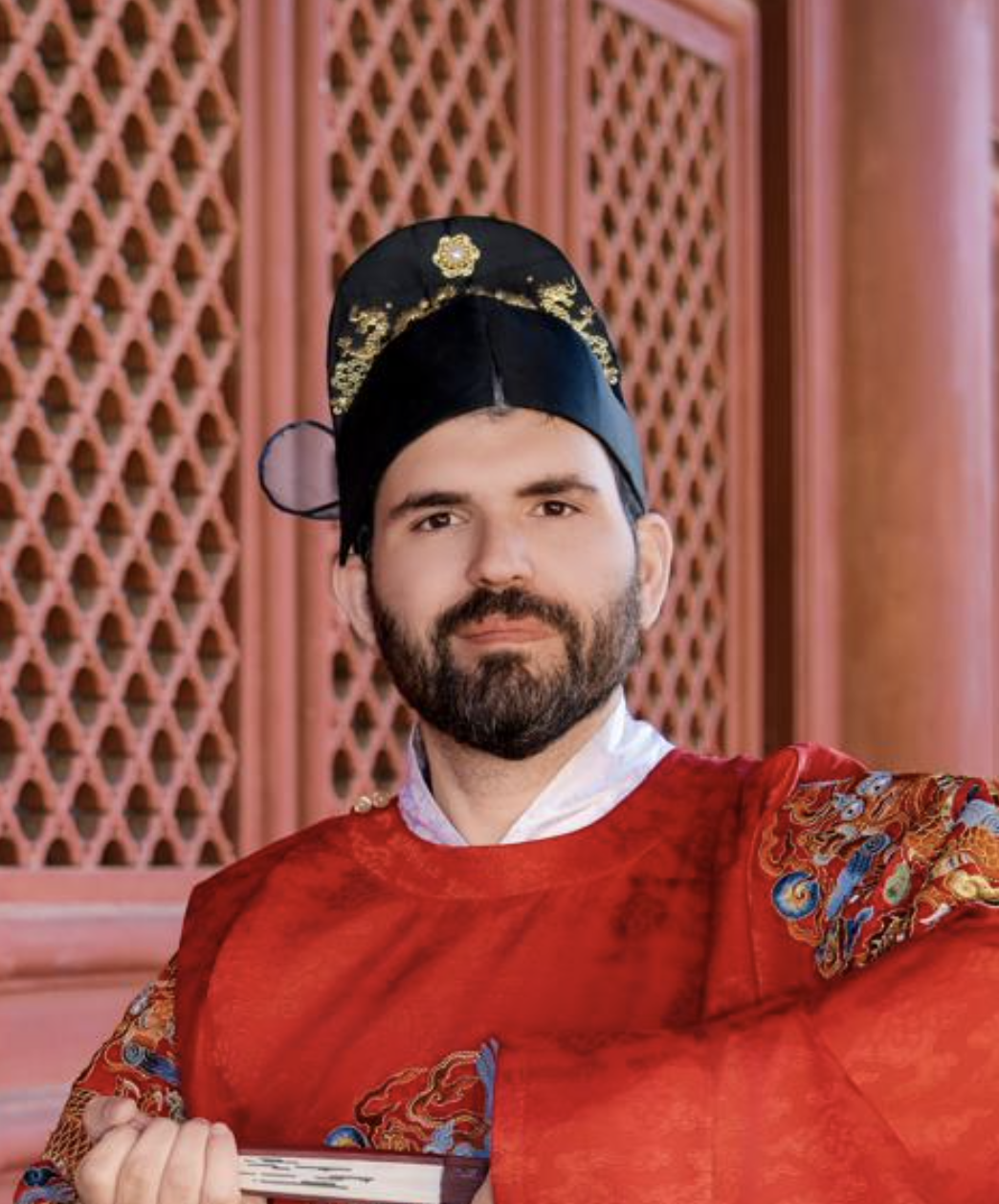
About Me
I am an assistant professor, researcher, and innovation manager at Brazil's Federal Institute of Paraná (IFPR), with over 10 years of experience bridging theoretical computer science and hands-on technological application in public education. I hold a Master's degree in Computer Science focused on Applied AI in Education, complemented by postgraduate specializations in Electronic Project Development and Industrial Automation Engineering.
My academic and professional journey is deeply rooted in practical, project-based learning. Since 2016, I have founded and coordinated educational robotics olympiads at local, regional, and state levels, mentoring students in hardware, programming, and collaborative problem-solving. Between 2015 and 2020, I leveraged a period of open curriculum flexibility at IFPR to pioneer interdisciplinary modules connecting software engineering, hardware prototyping, and real-world problem-solving for integrated technical high school students.
My portfolio includes the development of IoT-based asset management systems deployed across 33 campuses, motion-capture robotic prosthetics, CNC prototyping equipment, and registered software solutions. Currently, I seek to expand this practical expertise through a PhD, focusing on how emerging technologies — including Generative AI, Educational Robotics, and IoT — can be sustainably and equitably integrated into educational systems, particularly in developing contexts across the Global South.
Experience & Education
Assistant Professor of Basic, Technical, and Technological Education
Federal Institute of Paraná (IFPR) – Campus Astorga, Brazil | 2015 – Present
- Vanguard Educational Project Coordinator (2015 – 2020): Leveraged open curriculum flexibility to pioneer project-based learning methodologies and interdisciplinary modules.
- Educational Robotics Coordinator (2016 – Present): Founded and directed the campus robotics program, mentoring students for local, regional, and state-level competitions.
- Innovation Management Representative (NIT) (2016 – Present): Lead initiatives to bridge academic research with local industry needs and manage intellectual property.
- Head of Cabinet to the General Directorate (2026 – Present): Manage institutional administration, strategic planning, and cross-departmental technological integration.
- Teaching (2015 – Present): Instruct technical courses in Robotics, Programming Logic, Software Engineering, Systems Analysis, and Database Management.
Systems Analyst
Voalle Group (formerly Elitesoft Corp) – Brazil | 2014 – 2015
- Engineered core features for Integrator v5, an enterprise ERP platform serving 150+ regional telecommunications providers.
- Built direct hardware and network interfaces integrating the ERP with telecom infrastructure, including IVR systems and MikroTik networking equipment.
Technical Teaching Instructor & Course Coordinator
SENAI (National Service for Industrial Training) – Paraná, Brazil | 2011 – 2014
- Coordinated technical training for local and regional WorldSkills competitions in IT Software Solutions for Business, Web Design, and IT Solutions for Visually Impaired students.
- Instructed technical courses in Programming Logic, Networking, Hardware Maintenance, and Database Management.
Master of Science in Computer Science
State University of Londrina (UEL), Brazil | 2023 – 2025
Thesis: "An AI-based approach to identify and classify learning problems in object-oriented programming through source code analysis."
Focus: Applied Artificial Intelligence, Software Quality, and Computer Science Education.
Achievement: Recipient of a full academic merit scholarship from CAPES (Brazilian Federal Agency for Support and Evaluation of Graduate Education).
Postgraduate Specializations
União Brasileira de Faculdades (UNIBF), Brazil | 2020 – 2021
- Automation and Industrial Electronics Engineering (420 hours)
- Electronic Project Development Engineering (400 hours)
Bachelor of Science in Internet Systems
Pontifical Catholic University of Paraná (PUC/PR), Brazil | 2009 – 2011
Thesis: "Sistema Feedback Senai" – Developed a feedback management system for SENAI's educational programs.
Key Research & Development Projects
RFID-Based Automated Asset Management System for IFPR (2025–Present)
Leading the implementation and testing of a scalable IoT-based RFID solution for real-time asset tracking across 33 campuses of the Federal Institute of Paraná. Adapted from the SMARTBP project developed at Itaipu Technological Park's Open Technologies and IoT Competency Center. This system addresses the complex challenge of managing thousands of assets distributed across multiple geographic locations, replacing manual inventory processes with automated, real-time traceability.
Funded by: Itaipu Technological Park Foundation
Motion-Capture Robotic Hand Prototype (2025)
Developed a 3D-printed robotic prosthesis that replicates human hand gestures in real-time. Integrated Python, OpenCV, and MediaPipe for computer vision-based motion capture, with serial communication to Arduino-controlled servo motors. Designed as an educational tool to demonstrate remote manipulation, kinematics, and assistive robotics applications.
PAIPE: Educational Robotics Club (2025–Present)
Founded and coordinate an after-school robotics club at IFPR Campus Astorga, using project-based and collaborative learning methodologies. Students develop robot prototypes and automation systems, presenting their work at scientific events and exhibitions. The initiative addresses common difficulties students face with abstract programming concepts by grounding learning in tangible, hands-on projects.
Responsible AI: Awareness Campaign on Healthy AI Use in Schools (2025–Present)
Leading an extension project focused on promoting responsible AI use among students in Astorga and surrounding regions. The project addresses plagiarism prevention, ethical AI use, and awareness of both risks and benefits, aligned with UN Sustainable Development Goal 4.4 (Quality Education). Target audience: 240 students at IFPR Astorga and 1,546 students across four municipalities.
Funded by: Federal Institute of Paraná
IFPR Astorga Robotics Olympiad (2016–Present)
Founded and coordinated the campus robotics olympiad for 8 consecutive years, promoting educational robotics within the IFPR community and preparing students for regional and state-level competitions.
Intelligent Gas Control System for Poultry Houses (2025)
Developed an IoT-based environmental monitoring system for agricultural applications, using ESP32 microcontrollers and MICS-6814 multi-gas sensors to provide real-time air quality data and automated control responses.
Laser CNC Router for PCB Manufacturing (2021–2022)
Designed and built a functional CNC router prototype specifically dimensioned for rapid, low-cost prototyping of printed circuit boards in educational settings. Enabled students to transition from digital design to physical hardware implementation within classroom constraints.
Sistema FIAD (FIAD System) – Registered Software (2022)
Developed and registered an institutional management system with the Brazilian National Institute of Industrial Property (INPI). Registration Number: 512023000462-6.
A Esfinge (The Sphinx): Multireferential and Interdisciplinary Perspectives in Education (2017–2020)
Participated in an interdisciplinary research group bringing together scholars from Education, Arts, Philosophy, Geography, Biology, and Computer Science. The project explored the complexity of Brazilian education through multiple theoretical lenses, combining historical analysis, empirical research, and technological innovation to develop new pedagogical tools and curricular approaches.
Additional Educational Prototypes (2016–2017)
Developed various IoT and hardware teaching tools, including a computerized weather station, remote-controlled irrigation system, solar-powered Stirling engine prototype, and assistive safety equipment for visually impaired users.
Selected Publications
STRIK, B. H., HERNANDEZ, I. A. R., BELTRAMIN, A., & LIMANA, A. (2025)
"A Survey on Student Perceptions of the Academic Use of Artificial Intelligence in Brazil, Argentina, and Paraguay."
XV Science and Engineering Innovation Fair (FICiencias), Iguassu Falls, Brazil
STRIK, B. H. (2025)
Inteligência Artificial Generativa: primeiros passos (Generative Artificial Intelligence: First Steps). 1st ed.
São Paulo: Uiclap
STRIK, B. H. (2024)
Kodular em Ação: desenvolvendo apps para Android (Kodular in Action: developing Android apps). 1st ed.
São Paulo: Uiclap
MENOLLI, A. & STRIK, B. H. (2025)
"Educational Insights from Code: Mapping Learning Challenges in Object-Oriented Programming through Code-Based Evidence."
XXXIX Brazilian Symposium on Software Engineering (SBES)
MENOLLI, A., STRIK, B. H., & RODRIGUES, L. (2024)
"Teaching Refactoring to Improve Code Quality with ChatGPT: An Experience Report in Undergraduate Lessons."
XXIII Brazilian Symposium on Software Quality (SBQS), Salvador, Brazil
STRIK, B. H., MENOLLI, A., & BRANCHER, J. D. (2024)
"GPT AI in Computer Science Education: A Systematic Mapping Study."
XXXV Brazilian Symposium on Informatics in Education (SBIE)
Awards & Recognition
Gold Medal, WorldSkills Americas 2012
Category: IT Software Solutions for Business
Awarded first place in the regional competition, demonstrating excellence in practical software development skills under competitive pressure.
Silver Medal, Knowledge Olympics (Olimpíada do Conhecimento) 2010
Category: Information Technology
National-level competition organized by SENAI, recognizing outstanding technical skills in IT.
Honorary Evaluator with Certificate of Excellence
Knowledge Olympics 2014
Recognized for outstanding performance as an evaluator in IT Software Solutions and Web Design categories.
State Championship Coordinator
Knowledge Olympics 2013 – Web Design and Information Technology
Coordinated the state championship team, leading students to victory in regional competitions.